
Yearly,airports in Costa Rica confiscate an average of six tons of seashells taken by tourists,causing significant damage to its coastlines.
This AI tool,which the country provides to the scientific community,can be trained to properly classify species worldwide and thus return them to their ecosystems of origin.
BOGOTÁ,Colombia,Jan. 22,2025 --The seemingly harmless practice of collecting seashells as souvenirs is triggering an alarming environmental crisis. Research from the University of Florida and Barcelona found that this extraction degrades coastal ecosystems,endangers biodiversity,alters sediment stability,and weakens the ability of coastlines to withstand the effects of climate change.
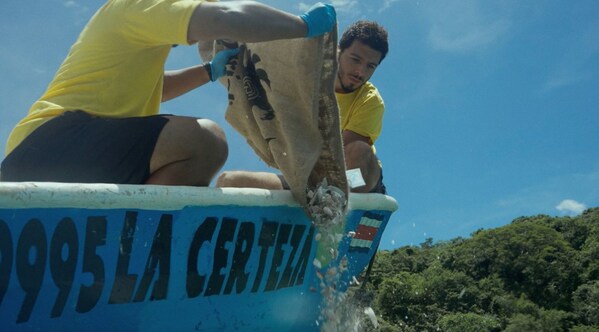
In Costa Rica,a significant number of seashells are seized at airports to prevent them from being taken abroad. For decades,these shells were buried because their origin—whether from the Pacific or Caribbean—was unknown,making it impossible to safely return them to the ocean. Without proper classification,returning the shells could pose risks,such as introducing non-native organisms,parasites,or microbes that might disrupt local biodiversity.
To address this issue,the "Back Home" project,led by FIFCOin collaboration with Imperial,the Ministry of Environment and Energy,AERIS,and the University of Costa Rica,has developed a solution that can be replicated globally. This project aims to reintegrate the shells into their appropriate ocean habitats by creating a tool to identify their origin and establishing a protocol for their safe return. Additionally,to slow down extraction,a public awareness platform was launched,featuring a documentary and educational content.
The AI tool developed by FIFCO can classify seashells by ecosystem using a photograph,achieving accuracy rates of up to 90% in mere seconds. The model was trained with over 18,500 images of 525 different species,which enables it to effectively differentiate between shells from the Caribbean and the Pacific,ensuring proper reintegration into their respective environments.
In 2024,more than 36,000 seashells were returned to their natural habitats,restoring their function within marine ecosystems. This milestone emptied storage containers at one airport and marked a shift in how Costa Rica tackles this issue.
The company has made the model's open-source code available to the scientific community,allowing other countries to train their own classification systems.
For additional information: https://imperial.cr/devueltaacasa/
Wildfires burning across Europe are setting off old WWI and WWII bombs
Green Electricity Illuminates Indoor Ski Resort in Central China
The Raefel team announced global recruitment, marking a major strategic upgrade to the SJPF investment research system.
INLIGHT: Bringing a Thousand-Year Lantern Heritage to the World
CURENTA Golf Cart Battery: Built So Every Cart Never Bogs Down
9 PEOPLE BUILT A $10 BILLION DOLLAR ECOSYSTEM IN ONE YEAR
©copyright 2009-2020 Diet Tips Daily
